Rebar Shop Drawings

Rebar Detail Drawing Provider

Detailed and accurate rebar shop drawings service provider. We have years of experience creating rebar shop drawings. Fill this form for quote.


Let's Dive Into Rebar Shop Drawings

What We Do – As A Rebar Detailer

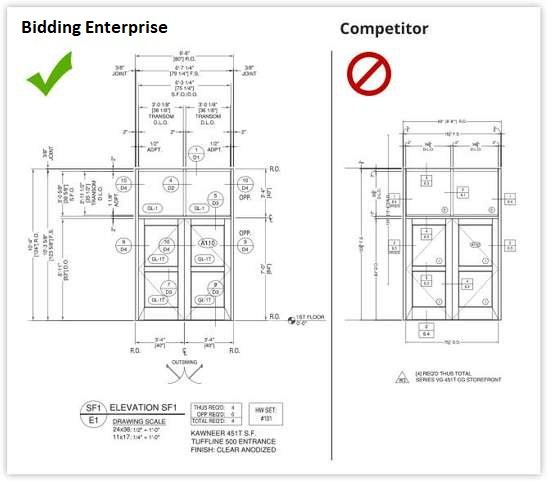
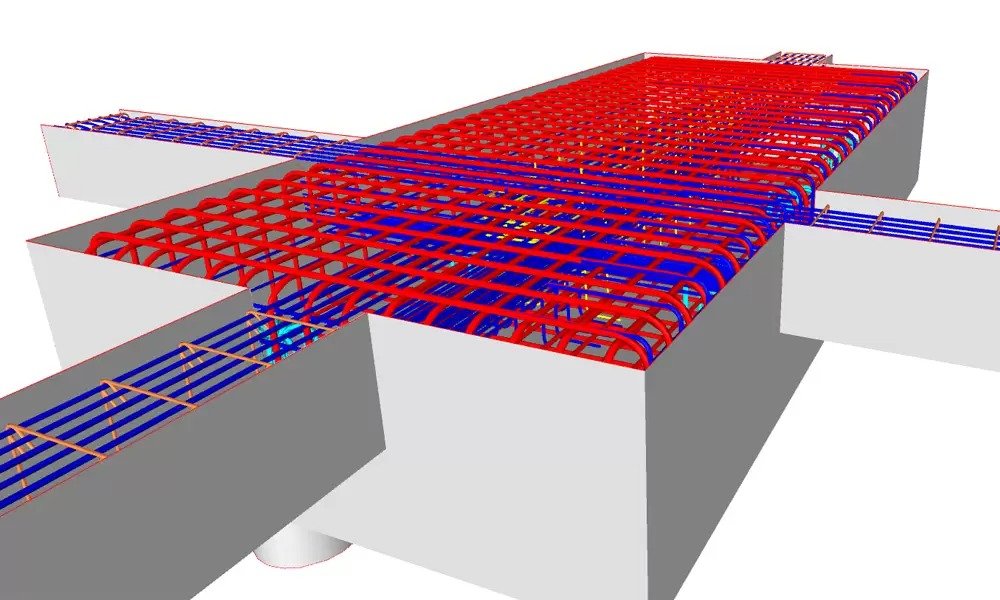
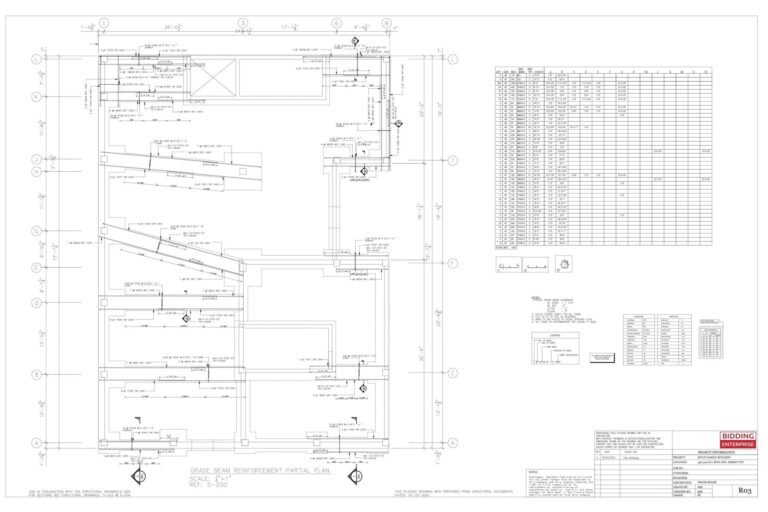
Here at ESTIMATOR.PRO, our team of skilled rebar detailers prepares rebar shop drawings for the placement of the reinforcing steel. We provide precise details on bends, shapes, and lap splices to meet the requirement of your specific project. Any issues regarding project constructability are tackled instantly before the first piece of rebar is bent or sheered. The detailed drawings provided by our rebar detailers often help our contractors to visualize the structures. In fact, with these detailed drawings, the task of ironworkers is highly simplified, as they know where to place and thus reduce the cost of installation.

rebar-shop-drawing

Rebar Shop Drawings
your team can trust

rebar-shop-drawing

Our Rebar Shop Drawing Services Include

3D Rebar Detailing Services

Rebar Drawings and Schedule Services

Rebar Estimation Services

Key Features​

Itemized List Of Quantities

Specialized Software

Affordable Rates

VALUE ADDED SERVICES AT NO ADDITIONAL COST​​

Color Coded Marked Plans

Collaboration Portal

Relationship Manager

Getting Started

1) Email us your project plans
2) Receive Our affordable Quote
3) We Prepare Estimate & Deliver to you

rebar Shop Drawing | FAQs

Rebar (reinforcement steel/reinforcing steel) is a building material used to improve properties of concrete blocks. Those wires are made of patterned steel (improves adhesion), and they are usually placed in a way to create a mesh. Thanks to the steel characteristics (thermal expansion coefficient very similar to the concrete’s), reinforcement compensates for low tensional strength of concrete. Rebar may boost the resistance to failure of concrete even several times.

For the imperial-unit countries, bar sizes give the diameter in units of the ⅛ inch for bar sizes #2 through #8. For example, 8⁄8 = #8 = 1 inch diameter. Equivalent metric size is typically specified as the nominal diameter rounded to the nearest millimeter. These sizes are not considered as standard metric sizes – they are considered soft conversion or the soft metric size. Imperial sizes system recognizes true metric bar sizes (No. 10, 12, 16, 20, 25, 28, 32, 36, 40, 50 and 60). That indicates the nominal bar diameter in millimeters.

See table below

Imperial bar sizeMetric bar size (soft)Nominal diameter (in)Nominal diameter (mm)
#2No.60.250 = 1⁄46.35
#3No.100.375 = 3⁄89.525
#4No.130.500 = 1⁄212.7
#5No.160.625 = 5⁄815.875
#6No.190.750 = 3⁄419.05
#7No.220.875 = 7⁄822.225
#8No.251.000 = 8⁄825.4
#9No.291.128 ≈ 9⁄828.65
#10No.321.270 ≈ 10⁄832.26
#11No.361.410 ≈ 11⁄835.81
#14No.431.693 ≈ 14⁄843
#18No.572.257 ≈ 18⁄857.3
  1. Define the total length of rebar you will use in your slab.
  2. Multiply it by the price per meter of your chosen rebar diameter — now you have the total rebar cost.
  3. You can also use the rebar calculator on the Omnicalculator website to verify your findings.
  1. If it is standardized rebar, find the manufacturing code and check its density.
  2. With the length () and diameter (d) of the rebar, calculate the rebar volume:
    (3.14 × d² / 4) × ℓ.
  3. Multiply the volume per the material density. Now, you have the rebar weight.

Not necessarily. When you expect heavy loads on the surface, you will require rebar because the weight will cause concrete to experiment tension stress. However, we always recommend you to check with a specialist.

You should avoid welding rebar. Instead, you should use a steel wire of one-sixteenth of an inch (1.6 mm) to tie the rebar. Rebar steel material typically has high carbon content, which makes them fragile after the thermal stress of uncontrolled welding. As a consequence, a structure with welded rebar may fail at a lower tension than what it was designed for.


FILL OUT THIS FORM TO GET YOUR QUOTE